
Session 3 Knowledge Check
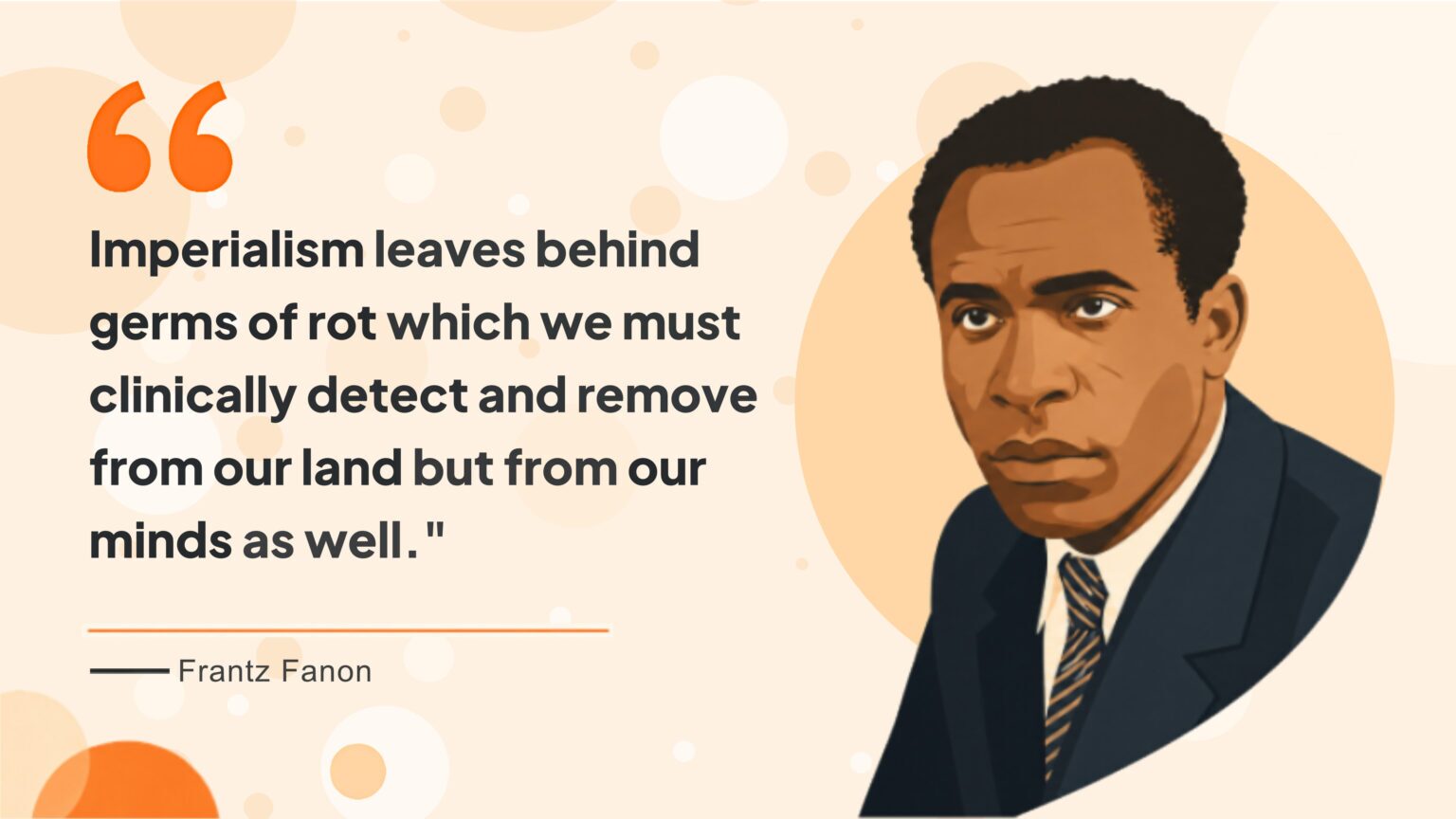
Frantz Fanon was a Martinican psychiatrist and revolutionary thinker who was actively involved in the Algerian liberation movement. His work explored the psychological effects of racism and colonial domination. In Black Skin, White Masks (1952), Fanon combined insights from Marxist political analysis with his clinical experiences as a psychiatrist to examine the impact of colonial rule on colonised peoples.
Fanon argued that, following colonialism, a local elite which he described as a comprador class, often replaced the colonial rulers while continuing to uphold colonial systems, values, and hierarchies. In this sense, “whiteness” became associated not simply with skin colour, but with power, status, and conformity to colonial norms.
He examined how racism and colonial domination could lead colonised people to internalise feelings of inferiority, alienation, and self-doubt, as dominant white cultural norms were presented as universal and superior. Fanon believed that genuine liberation required more than political independence; it demanded a radical restructuring of society grounded in the cultures, values, and agency of the people themselves. He also warned that international aid could sometimes function as a new form of ideological control rather than a meaningful form of repair or justice.
“The white world, the only honorable one, barred me from all participation… I was told to stay within bounds, to go back to where I belong…” (Fanon, 1986, pp. 11, 117)
Thought point: Can you identify examples in your own context where unequal power relationships still persist, or where previously colonised peoples continue to conform to norms established during colonial rule?