
When young people are given the opportunity to question the world around them, powerful ideas emerge. This spirit was central to the Future of Education Challenge 2025, where student teams from different schools were invited to reflect on one important question: Does education need to adapt to a rapidly changing world shaped by artificial intelligence, climate change and rising inequality?
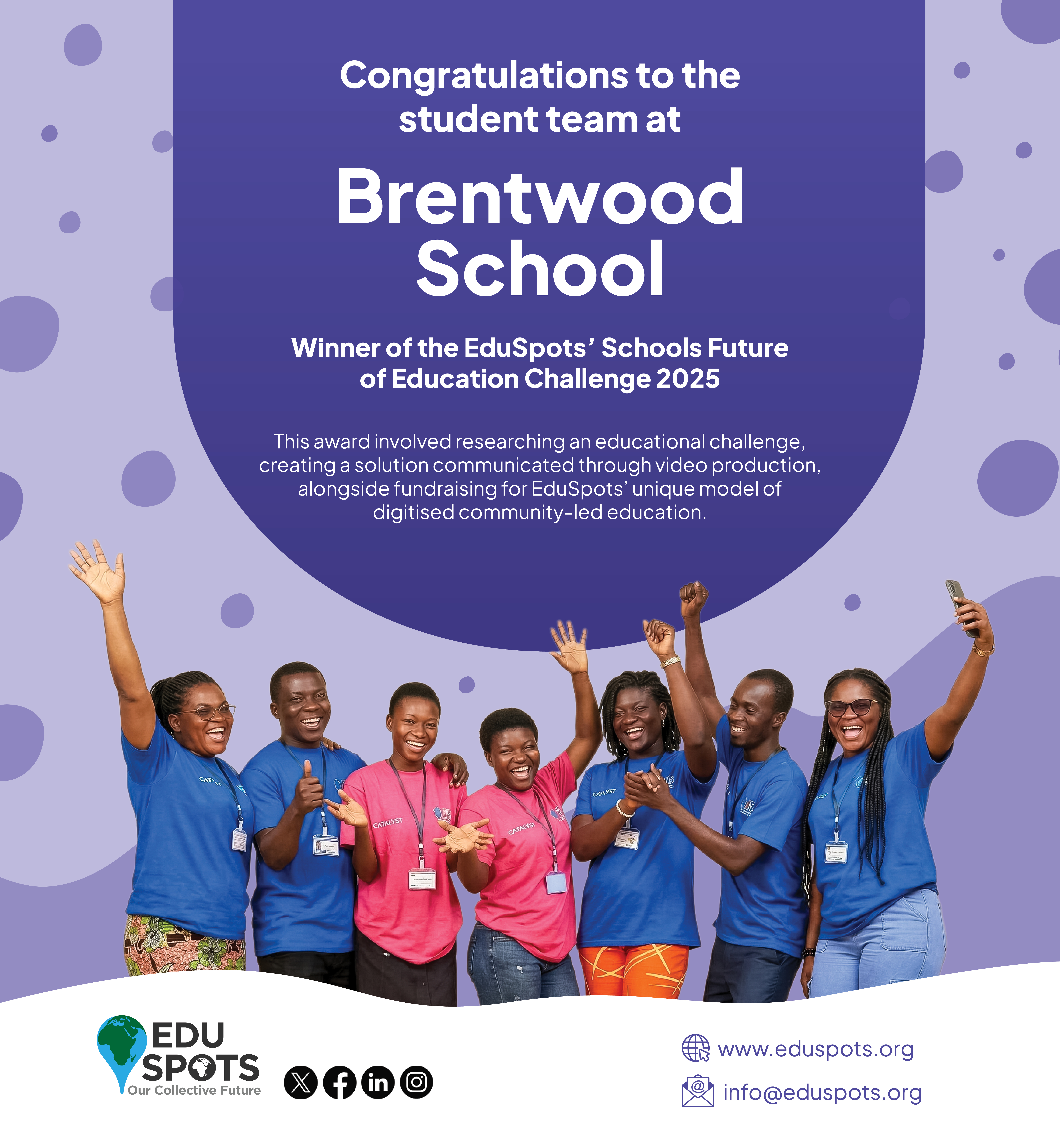
After months of research, collaboration, design and action, Brentwood School stood out as the winner of the challenge with a thoughtful and courageous submission that explored one of the most urgent issues in modern education, our growing dependence on technology.
A Team United by Purpose
The Brentwood team brought together a diverse group of students, each contributing their strengths to the project. James led artistic implementation, Fin guided the research and development, Aleksei coordinated the team’s direction and support, Jeffrey directed the project and cinematography, while Hannah managed communications and marketing.
Working together for several months, the team demonstrated how collaboration, creativity and critical thinking can turn ideas into meaningful solutions.
Rethinking Technology in Education
Their project, titled “Technology’s Impact in the Future of Education, in a Post-COVID Era,” explored how the pandemic accelerated the use of technology in learning and reshaped the way students interact with knowledge.
The team examined how tools such as online classrooms and video conferencing helped education continue during lockdowns. However, they also raised an important concern: as technology becomes more embedded in daily life, it can unintentionally reduce human connection, creativity and key social skills among young people.
Their research highlighted the growing challenge of balancing technological advancement with the human elements that make education meaningful.
A Simple but Powerful Solution
Rather than rejecting technology entirely, the Brentwood team proposed a balanced approach to learning. Their solution focuses on intentionally creating screen-free spaces and moments within education, allowing students to reconnect with activities that build imagination, relationships and critical thinking.
This includes ideas such as:
- Dedicated technology-free lessons within schools
- Encouraging families to revive traditions like reading together
- Promoting board games and collaborative offline activities that build social and cognitive skills
By making time for these experiences, the team believes education can better prepare young people to thrive in a world increasingly shaped by digital tools.
As the students powerfully concluded in their submission:
“Education is a vital aspect of human development… The future of education is in our hands; the future is now.”
Turning Ideas into Action
 Beyond research and design, the challenge also encouraged students to take action. The Brentwood team organised a Christmas-themed cookie decorating event at their school, inviting students and staff to participate while raising funds for education initiatives.
Through the event, they raised funds which were then doubled during the Big Give campaign to support EduSpots’ work advancing community-led education in 50 underserved communities in Ghana.
Inspiring the Next Generation of Changemakers
Brentwood School’s winning underscores that the future of education should not simply be shaped by technology; it should be shaped by thoughtful young people who ask difficult questions and design solutions that protect what matters most in learning.
Their work demonstrates that the next generation is not only ready to discuss the future of education but also ready to lead it.
Through curiosity, teamwork and action, the Brentwood team has shown exactly what the Future of Education Challenge was designed to inspire: young people thinking critically about the world and taking bold steps to improve it.
Watch their video submission here: