Approximately eleven years ago, a remarkable project found its footing within the Ghanaian education landscape. In a private school in the Ashanti Region, a library of donated books stood locked away, unused and inaccessible to the very learners it was intended to serve. Recognising this gap, a family within a neighbouring community initiated a simple and transformative idea: to create an open and inclusive learning space where access, ownership, and accountability rested in the hands of the community itself.
From this initiative, the first “Spot” was born. Named after the vibrant and characterful drinking spots found in Ghanaian towns, each one distinct and reflective of its local identity, EduSpots emerged as a model of community-driven education.
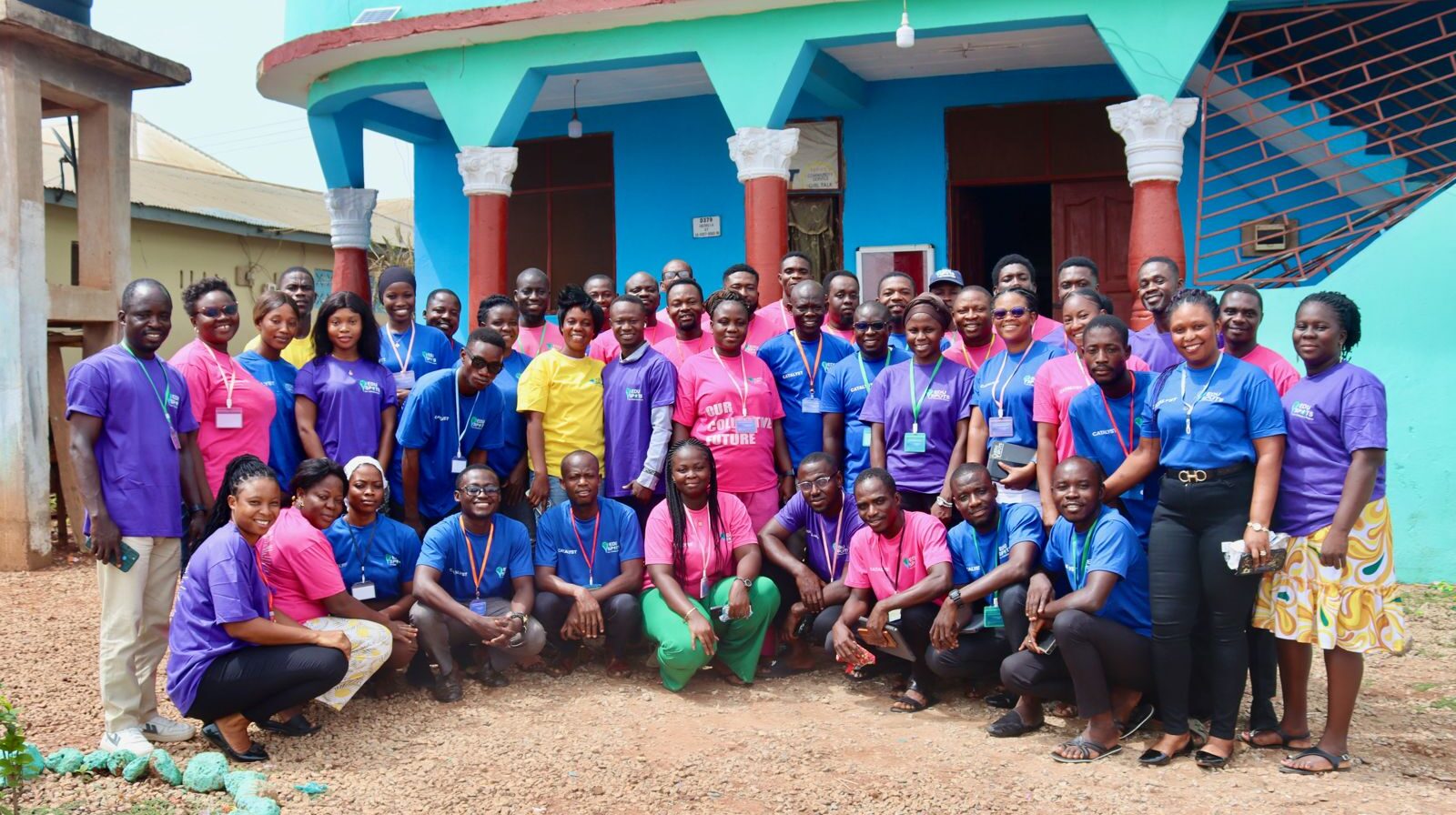
At its core, EduSpots empowers communities to establish learning hubs shaped by their own contexts, cultures, and people. What began as a response to a single challenge evolved into a broader movement, led by individuals who could identify gaps in education and transform them into opportunities for growth and connection.
As global connectivity continues to expand, so too does our access to one another. In a world that is constantly evolving, a new question began to take shape: What does it truly mean to promote active local and global citizenship, through behaviours, skills, and attitudes developed in education? From this question, the EduCitizens community was formed.
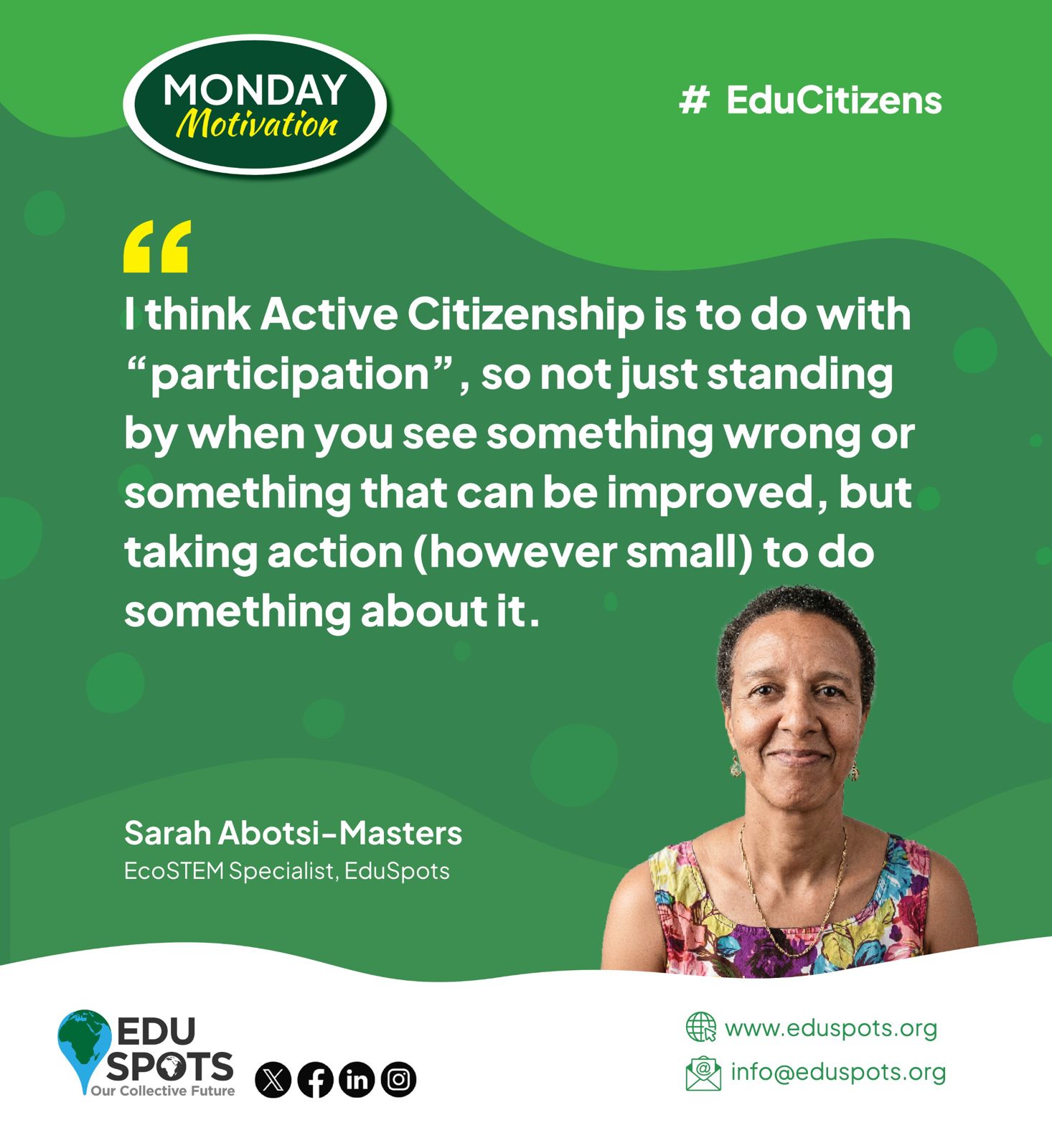
At the heart of EduCitizens lies a commitment to exploring this question in meaningful and reflective ways. Central to this exploration is the understanding that learners must first come to know themselves, their cultural and social positioning, and recognise how these influence their perspectives and actions. By fostering this awareness, EduCitizens seeks to empower young people to engage authentically and respectfully with others across diverse contexts. In doing so, it nurtures not only knowledge, but empathy, agency, and a deeper sense of shared humanity.
The EduCitizens community began, quite simply, with a series of emails, connections reaching across borders, time zones, and disciplines. These messages brought together a diverse group of academics, researchers, educators, and catalysts, all united by a shared interest in education and social impact. Initiated by Cat Davison as part of an Intercultural Leadership Programme funded by UNESCO’s Youth for Peace Initiative, EduCitizens has grown into a dynamic and collaborative space.
The structure of the community is intentionally flexible and accessible, currently taking shape through platforms such as WhatsApp and Zoom. These spaces allow for ongoing dialogue, shared learning, and engagement with expert-led sessions that challenge and inspire participants.
Our first Zoom session of 2026, hosted by Cat, featured Dr Amjad Mohamed Saleem, who delivered a thought-provoking presentation titled “The Crisis of Belonging.” This session invited participants to reflect deeply on their own experiences of identity and belonging. Through a simple yet powerful activity, exploring the meaning and evolution of our names, we uncovered the ways in which our identities are shaped, adapted, and sometimes altered by the communities around us.
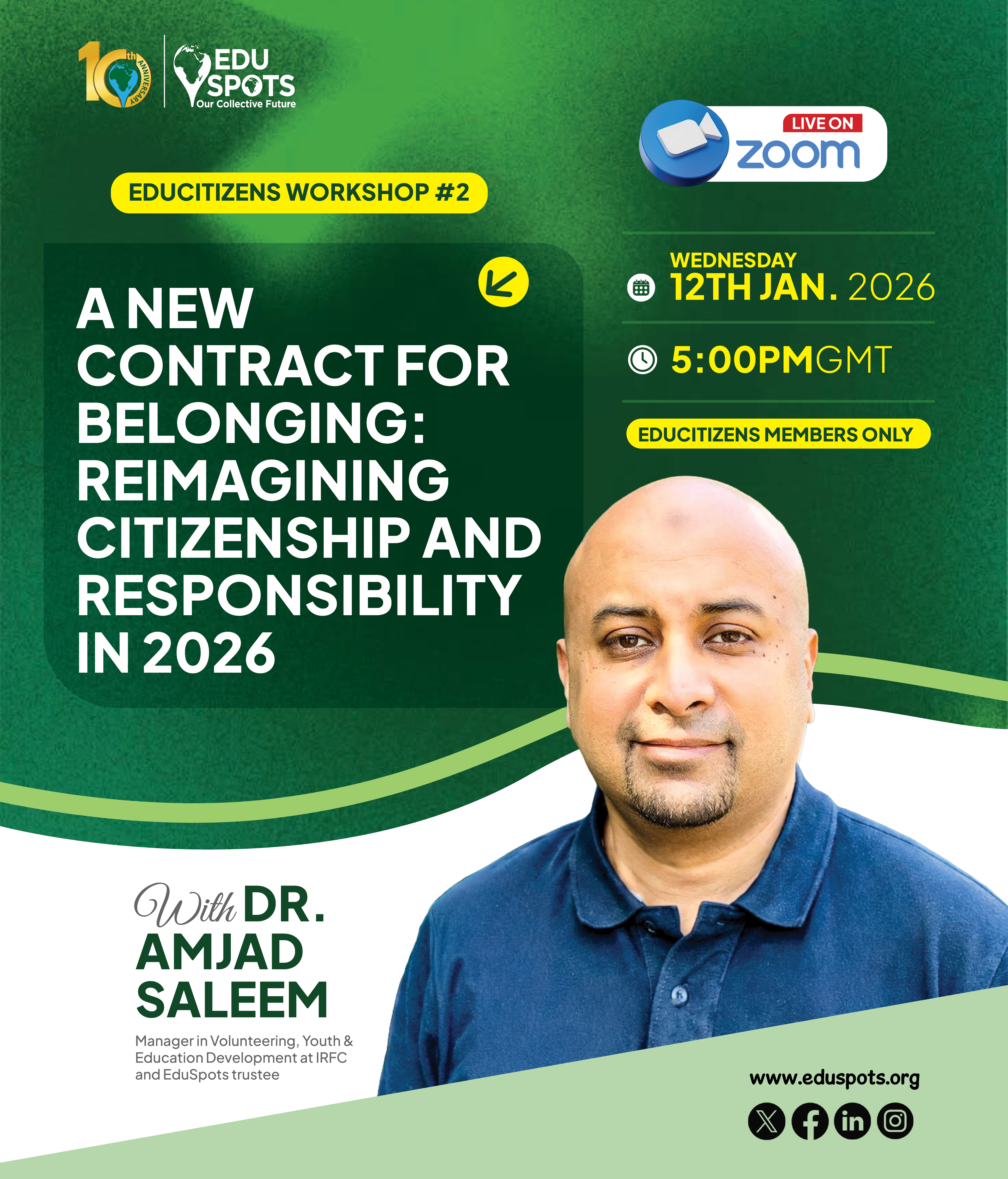
It became evident that many of us have, at some point, modified aspects of our identity, whether through nicknames, shortened versions of our names, or the quiet acceptance of mispronunciations deemed “too difficult” to correct. These reflections highlighted both the subtle and profound ways in which belonging is negotiated in our daily lives.
Dr Saleem emphasised that belonging is not a passive state, but an active practice. It exists in how we value others, and in our willingness to listen deeply rather than impose our own perspectives. As he shared, “Belonging is ultimately a practice we have to cultivate together, without leaving anyone behind.” Within such spaces, peace becomes not an abstract concept, but a shared and attainable outcome.
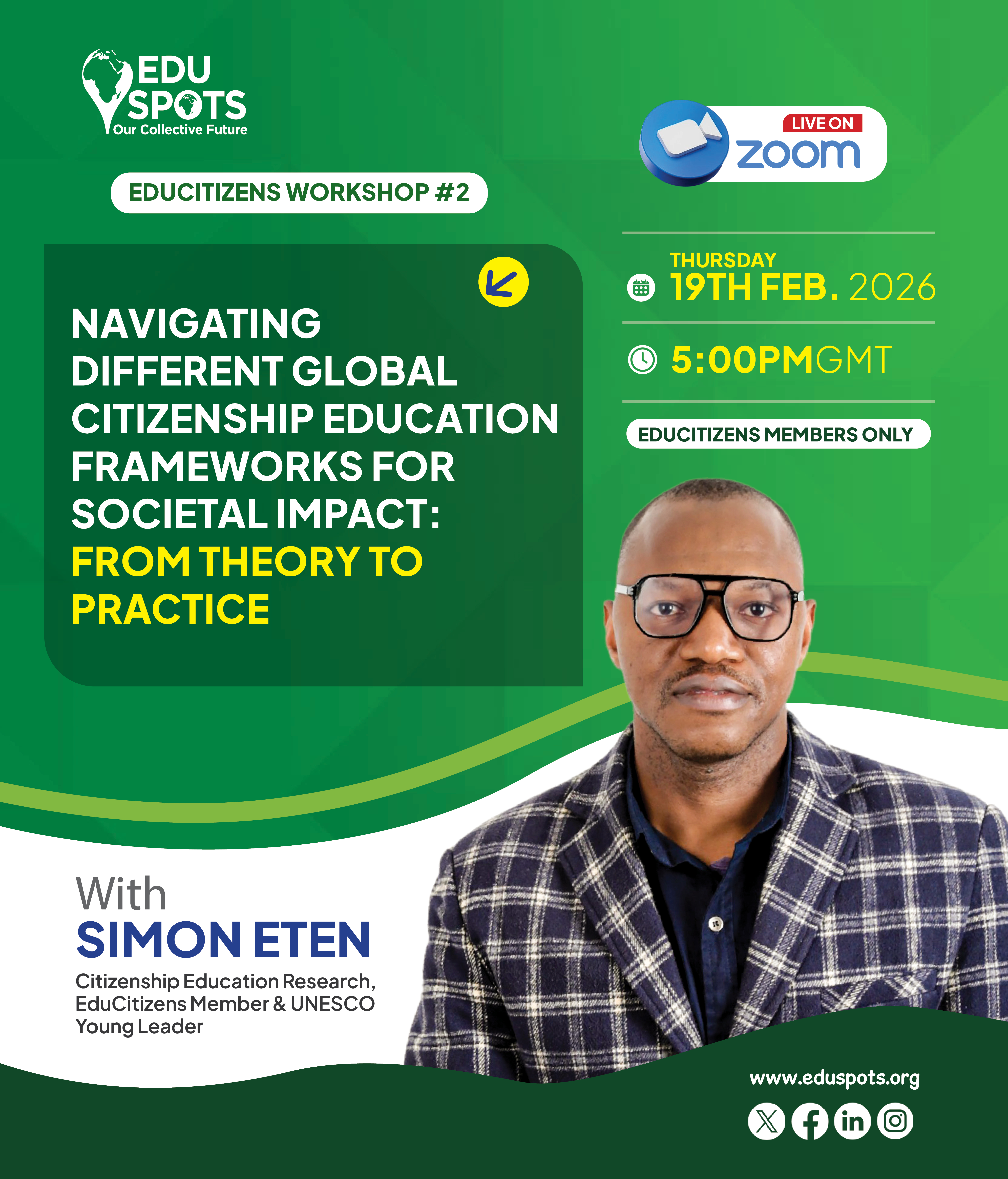
The following session, led by Dr Simon Eten, built on these ideas through his presentation, “Navigating Different Global Citizenship Frameworks for Social Impact: From Theory to Practice.” Dr Eten provided valuable insight into the evolution of EduSpots, particularly in relation to the balance between different models of charity and development.
He introduced the distinction between “soft” and “critical” forms of charity. Soft charity often views poverty and need as isolated issues requiring immediate relief, while critical charity adopts a broader social justice lens, seeking to understand and address underlying systemic causes. The early days of EduSpots, collecting and distributing donated books from the UK, reflected elements of this soft approach. While well-intentioned, it became clear that the materials being provided did not always reflect the lived realities of the learners they were meant to serve.
This realisation prompted a significant and meaningful shift. Rather than relying solely on external donations, EduSpots began investing in literature by African authors, stories rooted in the cultures, languages, and experiences of the communities themselves. These texts became powerful tools for affirmation, allowing learners to see themselves represented and valued. With a stronger sense of identity established, learners were then better positioned to engage with global perspectives in a more balanced and meaningful way.
Dr Eten further explored the relationship between the Charity Model and the Human Rights Model. While the former addresses immediate needs and provides essential entry points for support, the latter focuses on long-term change by tackling root causes and promoting community agency. Importantly, he emphasised that these models are not mutually exclusive. Instead, their integration offers a more sustainable and effective approach, combining direct service delivery with advocacy to support lasting impact.
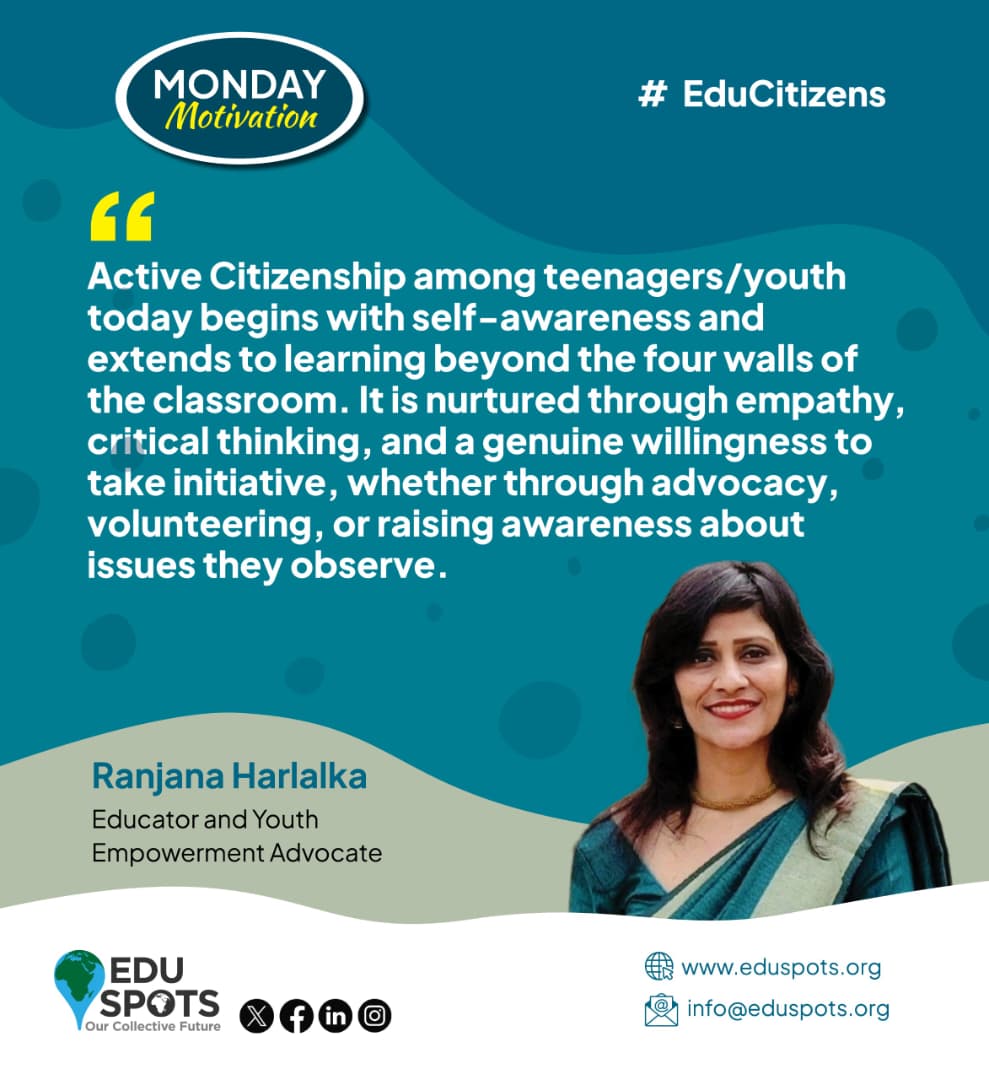
Learning within the EduCitizens community extends well beyond these formal sessions. Our WhatsApp platform has become a vibrant space for ongoing engagement, structured around a variety of weekly themes. The #SharedPerspectives series invites a guest speaker each week, creating opportunities for dialogue, reflection, and collective learning. Thursdays are dedicated to thought-provoking discussions, where members share questions and personal experiences, contributing diverse perspectives. Wednesdays focus on opportunity-sharing, with members highlighting funding avenues and initiatives that may benefit others within the network.
Together, these interactions reflect a community united by a shared purpose: to contribute meaningfully to the development of EduSpots’ new online course platform. This platform builds on existing work in charitable ethics, postcolonial thinking, and intercultural understanding, and seeks to incorporate the voices, insights, and experiences of its participants.
In essence, EduCitizens is a community and a space of co-creation, reflection, and purposeful action. It invites us not only to ask important questions, but to live out the answers together.
Written by Cameryn Strydom, EduCitizens Intern & Group Member, South Africa