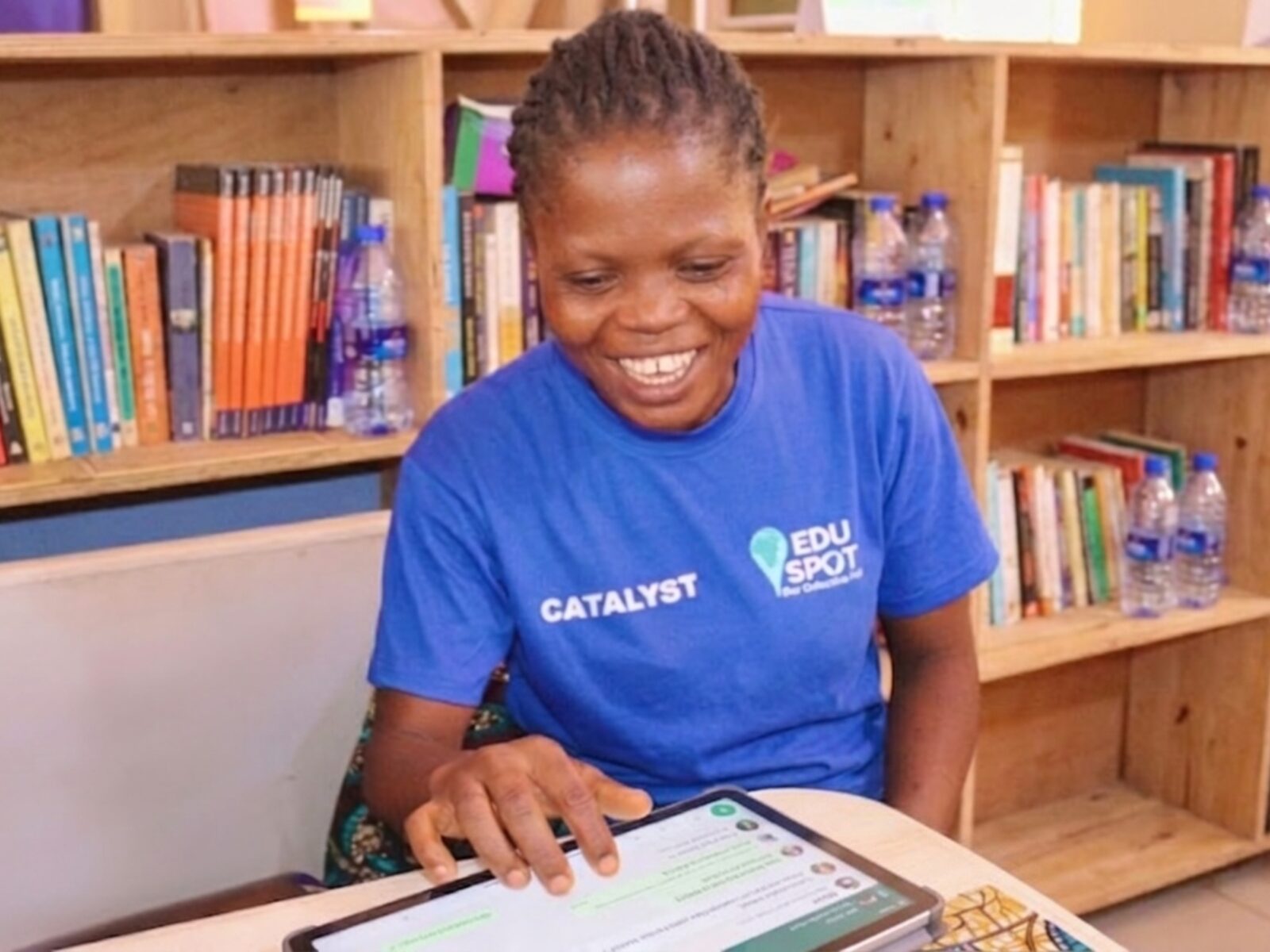
“I feel this is a very great opportunity, especially for Catalysts and educators like us. The trainings are helping us not just to use digital tools for fun, but to use them meaningfully for learning, communication, and community engagement.”
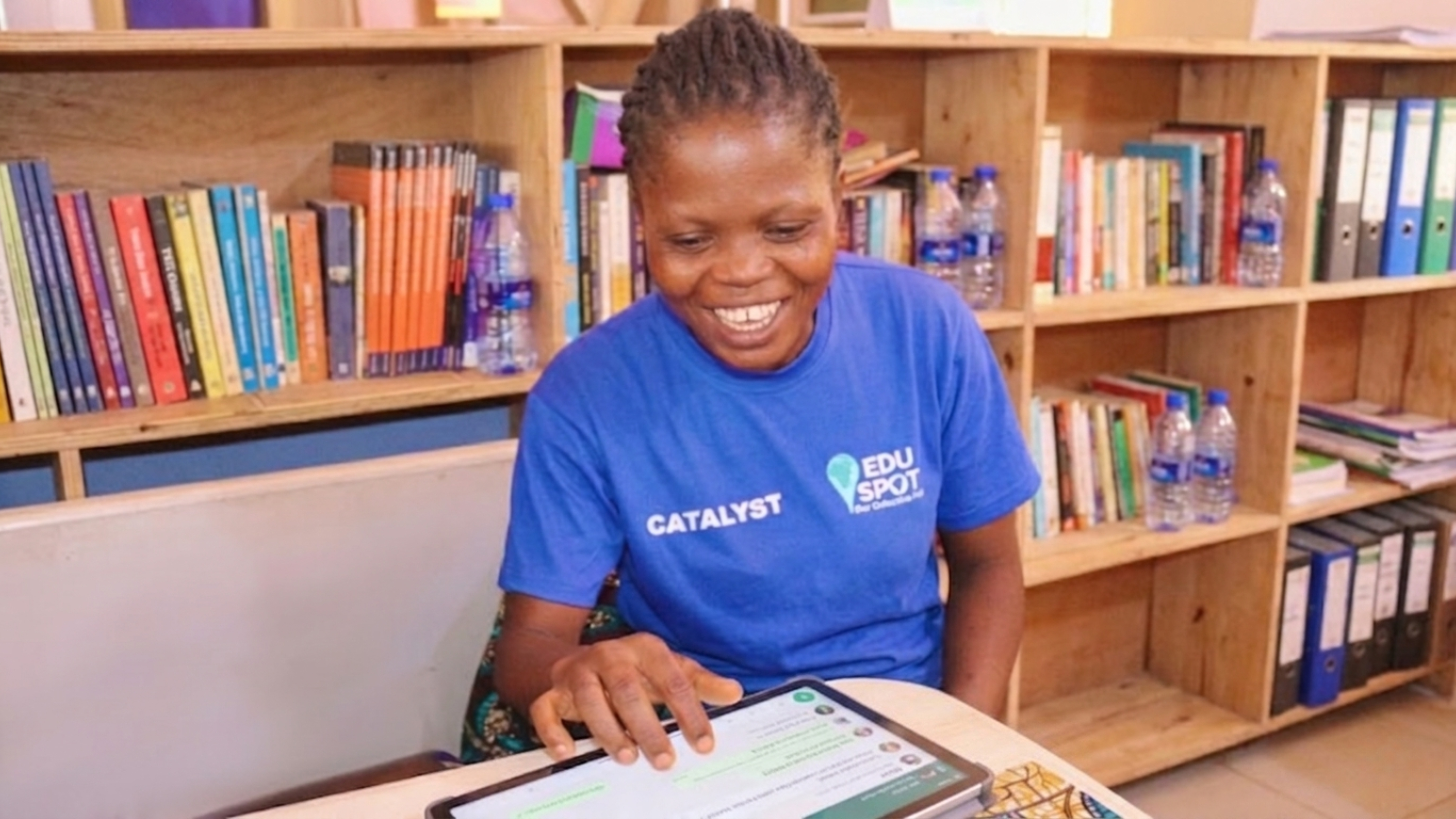
When Rita Otabil joined the EduBytes Programme, she was simply curious. As a professional early childhood educator teaching KG Two at Central Preparatory School and leading the EcoSTEM strand at Air Force Barracks Spot, she wanted to understand how digital tools could support her work better. What she did not expect was that the programme would completely reshape the way she engages learners, parents, and her wider learning community through something as familiar as WhatsApp.
Rita’s first encounter with EduBytes was through a Canva training session. At the time, she had never used the platform before. Like many educators in underserved communities, digital tools felt distant and unfamiliar. But that single training opened a new world. She began designing simple birthday cards, experimenting with creativity, and gradually building confidence with digital tools. Soon after, she explored Google Docs and other platforms, realising that the future of education was increasingly digital and that she needed to grow alongside it.
That journey took a deeper turn when she joined the EduBytes training on WhatsApp for Community Engagement & Learning. Like many people, Rita had always used WhatsApp casually. But through the programme, she discovered that WhatsApp could be far more than a messaging app. It could become a powerful learning ecosystem.
One of the biggest lessons she carried away was the importance of intentional community engagement. She learned that every group needs a clear purpose, active participation, and meaningful interaction. The sessions on WhatsApp community charters, tagging, pinning messages, and analysing engagement through chat statistics completely changed her perspective.
“I never knew you could have more information in WhatsApp like that,” she reflected after learning how to use chat statistics to understand participation and engagement patterns within groups.
Rather than allowing her classroom WhatsApp group to remain a quiet platform used only for PTA announcements and financial reminders, Rita reimagined it as a digital learning community that actively supports children and parents beyond the classroom walls.
Every evening, usually between 5 PM and 6 PM, Rita shares simple reading passages, classroom assignments, educational tips, and age-appropriate learning resources directly with parents through the WhatsApp group. Parents are encouraged to sit with their children, guide them through the reading activities, record their reading practice, and share it back in the group.
To further improve literacy skills, Rita introduced parents to digital learning tools such as the Read Along and the Jolly Phonics Lessons app. Instead of children spending all their screen time on entertainment, families are now using smartphones as learning tools. Parents have testified that their children are becoming more interested in reading, more confident in sounding out words, and more excited about practising literacy skills at home.
Learners began recognising stories and passages before lessons even started because they had already practised them at home with their parents. Children who were once shy became excited to read aloud because they loved hearing themselves improve through the recordings shared on WhatsApp.
“The children become very excited hearing themselves read, and it also helps parents understand where their wards need support and where they are improving,” she shared.
For Rita, WhatsApp has become more than a messaging tool. It is now a bridge connecting school and home, helping parents become active learning partners while creating a supportive environment where children can build stronger literacy skills and greater self-confidence. Through one WhatsApp group, she is nurturing a culture of reading, participation, encouragement, and shared responsibility for learning within her community.
Her story reflects the growing impact of the EduBytes Programme: strengthening the digital skills confidence of local changemakers and helping them turn everyday technology into tools for learning, leadership, and community transformation.
As she reflected on her EduSpots journey, Rita shared, “In fact, I have come to realise that EduSpots is a big family. It is not just an organisation, but a family where people genuinely care about each other and support one another to grow.”
“The EduBytes programme is a nice opportunity,” she said. “If you leave this opportunity, I’m not sure you’ll get it free anywhere.”